
Beta-tricalcium phosphate (β-TCP) is a breakthrough biomaterial in bone regeneration, offering exceptional biocompatibility and adjustable resorption.
Its exceptional biocompatibility, osteoconductivity, and adjustable resorption make it an ideal substitute for natural bone minerals. β-TCP's structure closely resembles that of natural bone, positioning it as a favored choice in orthopedics, dentistry, and maxillofacial surgery.
Recognized as bone graft beta-TCP or simply as a "beta-TCP," its versatility is transforming regenerative medicine. With customizable particle sizes and medical-grade purity, β-TCP serves as a foundation for next-generation scaffolds, dental grafts, and regenerative therapies developed by research teams worldwide.

β-TCP for Bone Regeneration & Defect Repair
Repair of Large Bone Defects
β-TCP plays a crucial role in repairing large bone defects. It integrates smoothly with host tissue while gradually resorbing as new bone forms. In orthopedic applications, it is used to treat traumatic bone loss, tumor resection cavities, and non-union fractures — providing a stable, biocompatible scaffold for natural regeneration.
Verified Regenerative Performance
Research has shown that β-TCP can achieve significant bone regeneration. In a sheep iliac defect model it produced 28.98% bone regeneration at eight weeks, outperforming untreated controls. Its porous design — with 60–80% porosity and optimal pore sizes above 300 μm — supports vascular growth and cell migration, ensuring efficient bone repair.
Synergy with Hydroxyapatite & Stem Cells
When combined with hydroxyapatite (HA) powder or used in biphasic calcium phosphate (BCP) formulations, β-TCP integrates with natural bone tissue and stimulates stem cell differentiation through its high affinity for proteins like BMPs. It can be manufactured as granules, blocks, or putties — with porosity that encourages vessel penetration and distribution.
How β-TCP Supports Bone Regeneration
Integration
β-TCP scaffold integrates with host tissue at the defect site upon implantation.
Vascularization
Porous structure supports vessel penetration and rapid cell migration into the matrix.
Resorption
Material gradually resorbs as new bone tissue forms, releasing Ca²⁺ and PO₄³⁻ ions.
Bone Formation
Stem cell differentiation is stimulated and natural bone replaces the scaffold.
β-TCP as a Synthetic Graft Material in Dentistry
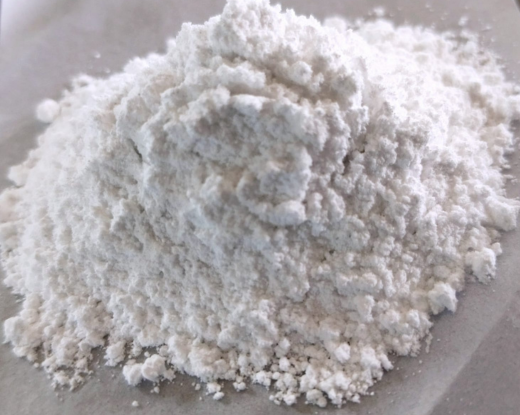
In dentistry, β-TCP is gaining ground as a synthetic graft material. It is widely used for socket preservation, sinus augmentation, and periodontal regeneration — providing surgeons with a reliable, biocompatible alternative to autografts and xenografts.
In socket preservation, pure β-TCP maintains the volume of the alveolar ridge after tooth extraction, providing a solid foundation for future implant placement and reducing infection risks. In sinus augmentation, β-TCP-based grafts yield substantial vertical bone gain and promote faster vascularization compared to xenografts.
For periodontal regeneration, β-TCP membranes demonstrate superior clinical attachment gains over traditional collagen barriers, thanks to their sustained release of calcium ions, which boost BMP-2 expression and accelerate tissue healing.
Reliable foundation for dental implants
Pure β-TCP preserves alveolar ridge volume after extraction — providing a stable, infection-resistant base for predictable future implant placement.
Faster vascularization & tissue gain
Sustained calcium ion release boosts BMP-2 expression, supporting vertical bone gain in sinus augmentation and superior attachment in periodontal therapy.
Enhancing Outcomes with Stem Cells
When combined with stem cells, β-TCP offers both structural support and enhanced biological activity. Scaffolds seeded with bone marrow-derived or adipose-derived stem cells have shown improved union rates and increased bone volume in regenerative protocols.
Exosome-functionalized β-TCP further accelerates angiogenesis compared to growth factor-loaded grafts, opening new pathways for cell-mediated bone repair. The synergy between the resorbable mineral scaffold and the regenerative cells produces results that neither component achieves alone.
However, early healing may sometimes be delayed due to rapid calcium ion release, and careful control over particle size is needed to prevent migration in sinus graft applications — making customizable particle specifications essential for advanced research protocols.
Engineering the Next Generation of β-TCP Scaffolds
Recent advancements in material engineering have expanded the capabilities of β-TCP. From 3D-printed patient-specific scaffolds to antibacterial nanoparticle coatings, β-TCP is at the forefront of bone repair and regeneration research:
3D-Printed ScaffoldsPCL · β-TCP Composites
50% PCL–50% β-TCP cages have outperformed traditional titanium in spinal fusion models, achieving 85% trabecular bone infill at twelve weeks.
Antibacterial CoatingsSilver Nanoparticle Surfaces
Silver nanoparticle coatings on β-TCP reduce bacterial biofilm formation while maintaining full biocompatibility for clinical use.
4D-Printed ScaffoldsShape-Memory Polymers
Emerging 4D-printed β-TCP scaffolds with shape-memory polymers promise minimally invasive deployment and targeted drug release.
β-TCP's ability to support robust bone growth while gradually resorbing makes it an outstanding material for treating complex bone defects. Medoja Bio Pvt. Ltd. supplies medical-grade β-TCP with customizable particle sizes for research teams developing the next generation of regenerative therapies.
The Future of β-TCP in Regenerative Medicine
With ongoing research, β-TCP is set to play an even more vital role in advancing patient care and delivering innovative, effective treatments for complex bone injuries and diseases.
Embedded Sensors for Real-Time Monitoring
Next-generation β-TCP scaffolds with embedded sensors that monitor the bone healing process in real time.
Localized Growth Factor Delivery
Gene-activated matrices using β-TCP for localized growth factor production at the site of bone repair.
Custom 3D & 4D Implants
Patient-specific 3D and 4D-printed β-TCP scaffolds with controlled porosity and shape-memory deployment.
The diverse applications of β-TCP span orthopedics, dentistry, and maxillofacial surgery. Coupled with advanced technologies and biological enhancements, β-TCP is at the forefront of bone repair and regeneration. As part of this innovation, Sustainable Biomaterials are gaining attention for their role in enhancing safer, more effective regenerative care.
Frequently Asked Questions
01 What is the purity and particle size of your β-TCP powder?
Our β-TCP is 99% pure with a customizable particle size of 1–2 μm. Each batch is verified through XRD analysis and accompanied by a Certificate of Analysis (COA). Custom particle distributions are available for specific research protocols.
02 Is your β-TCP suitable for bone graft and scaffold research?
Yes. Our research-grade β-TCP is biocompatible and osteoconductive — ideal for bone graft research, scaffold fabrication (including 3D-printed PCL/β-TCP composites), socket preservation studies, sinus augmentation trials, and periodontal regeneration applications. CAS 7758-87-4, formula Ca₃(PO₄)₂.
03 What is the minimum order quantity and how is pricing structured?
The minimum order is 100 g. Pricing scales with volume — bulk orders of 1 kg and above receive preferential rates. We provide samples on request for compatibility testing prior to commitment, and custom particle-size specifications can be discussed at the quote stage.
04 What are typical lead times and shipping options?
Standard production lead time is 5–7 business days from order confirmation, with custom particle sizes requiring slightly longer. We ship globally with full export documentation, including Safety Data Sheets and harmonized system codes for customs clearance.
05 What documentation do you provide with each shipment?
Every shipment includes a Certificate of Analysis (COA), Safety Data Sheet (SDS), and XRD purity verification and additional regulatory documentation for specific research and market jurisdictions is available on request.