
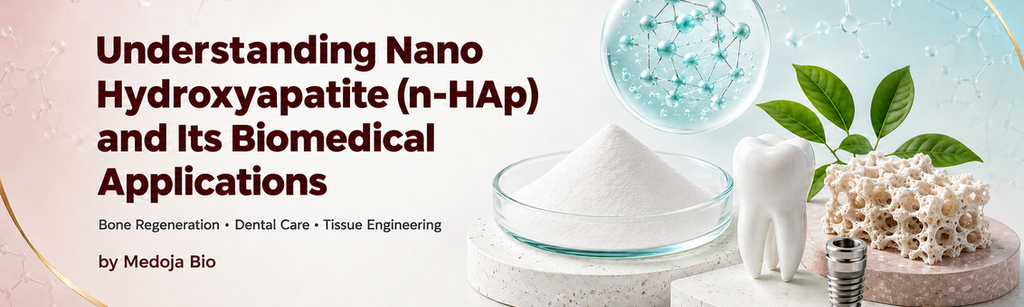
Nano Hydroxyapatite (n-HAp) is an advanced biomaterial that has gained significant attention in the field of biomedical science due to its excellent biocompatibility, bioactivity, and similarity to natural bone minerals. With its unique nanoscale structure, n-HAp plays an important role in modern healthcare applications, including bone regeneration, dental treatments, drug delivery, and tissue engineering.
What Is Nano Hydroxyapatite (n-HAp)?
Hydroxyapatite (HAp) is a naturally occurring calcium phosphate mineral that forms the primary inorganic component of human bones and teeth. Nano Hydroxyapatite refers to hydroxyapatite particles designed at the nanometer scale, typically ranging between 20 and 100 nanometers.
Because of its similarity to natural bone structure, n-HAp can interact effectively with biological tissues. This makes it an ideal material for developing implants, coatings, and regenerative medical solutions.
Importance of Nano Hydroxyapatite in Biomedical Fields
The unique properties of n-HAp make it highly valuable for various biomedical applications. Its chemical composition, surface properties, and ability to support cell growth help improve healing and tissue regeneration.
Some key advantages of Nano Hydroxyapatite include:
- Excellent compatibility with human tissues
- Ability to promote bone formation
- Strong bonding with natural bone
- High surface area for better biological interactions
- Support for controlled drug and protein delivery
These properties allow researchers and medical professionals to develop safer and more effective treatments.
Nano Hydroxyapatite in Bone Regeneration
One of the most important applications of n-HAp is bone tissue engineering. Traditional bone graft materials may have limitations, but nano hydroxyapatite provides a structure that closely resembles natural bone minerals.
When used in bone implants and scaffolds, n-HAp helps stimulate osteoblast activity, which supports the formation of new bone tissue.
The ability of n-HAp to integrate with existing bone makes it a promising solution for patients requiring bone reconstruction after injuries, fractures, or surgical procedures.
Dental Applications of n-HAp
Nano Hydroxyapatite is widely used in advanced dental care because teeth naturally contain hydroxyapatite minerals. It is commonly found in modern toothpaste, dental coatings, and restorative materials.
n-HAp can help:
- Strengthen tooth enamel
- Reduce tooth sensitivity
- Repair early enamel damage
- Support remineralization of teeth
Its ability to fill microscopic surface defects makes it an effective ingredient for improving oral health.
Role in Drug Delivery Systems
Another emerging application of Nano Hydroxyapatite is targeted drug delivery. Due to its porous structure and excellent biocompatibility, n-HAp can act as a carrier for therapeutic molecules.
Researchers are exploring its use for delivering antibiotics, proteins, and other medications directly to affected areas. This approach can improve treatment efficiency while reducing unwanted side effects.
Applications in Tissue Engineering
Tissue engineering focuses on creating materials that help damaged tissues repair and regenerate. Nano Hydroxyapatite is often combined with biodegradable polymers to create advanced scaffolds.
These scaffolds provide structural support for cell growth and encourage natural healing processes. They are being studied for applications in bone, cartilage, and dental tissue regeneration.
Future of Nano Hydroxyapatite Technology
With continuous advancements in nanotechnology and biomedical research, the applications of n-HAp are expected to expand further. Scientists are exploring improved manufacturing techniques, customized implants, and advanced regenerative therapies.
The combination of Nano Hydroxyapatite with other biomaterials may lead to innovative solutions for treating complex medical conditions and improving patient outcomes.
Conclusion
Nano Hydroxyapatite (n-HAp) is a revolutionary biomaterial with significant potential in modern medicine and dentistry. Its similarity to natural bone minerals, excellent biocompatibility, and regenerative properties make it valuable for bone repair, dental care, drug delivery, and tissue engineering.
As research continues, Nano Hydroxyapatite is expected to become an important component of future biomedical technologies, helping create safer and more effective healthcare solutions.