
Resorbable Blast Media (RBM) offers a transformative surface treatment solution for dental implants, ensuring minimal residual particles post-treatment.
By creating a clean and biologically favorable surface, our RBM supports optimal osteoblast proliferation, leading to faster and more reliable osseointegration. This approach is especially beneficial for immediate implant placements, as it promotes accelerated healing times and reduces the risk of complications.
Thanks to its resorbable properties, our RBM leaves no trace of foreign particles on the implant surface, ensuring a cleaner environment for tissue integration. This helps minimize inflammation and irritation, leading to a more comfortable patient experience. Ideal for contemporary dental implant procedures, our advanced RBM technology supports quicker recovery, stable bone-to-implant interfaces, and higher success rates.
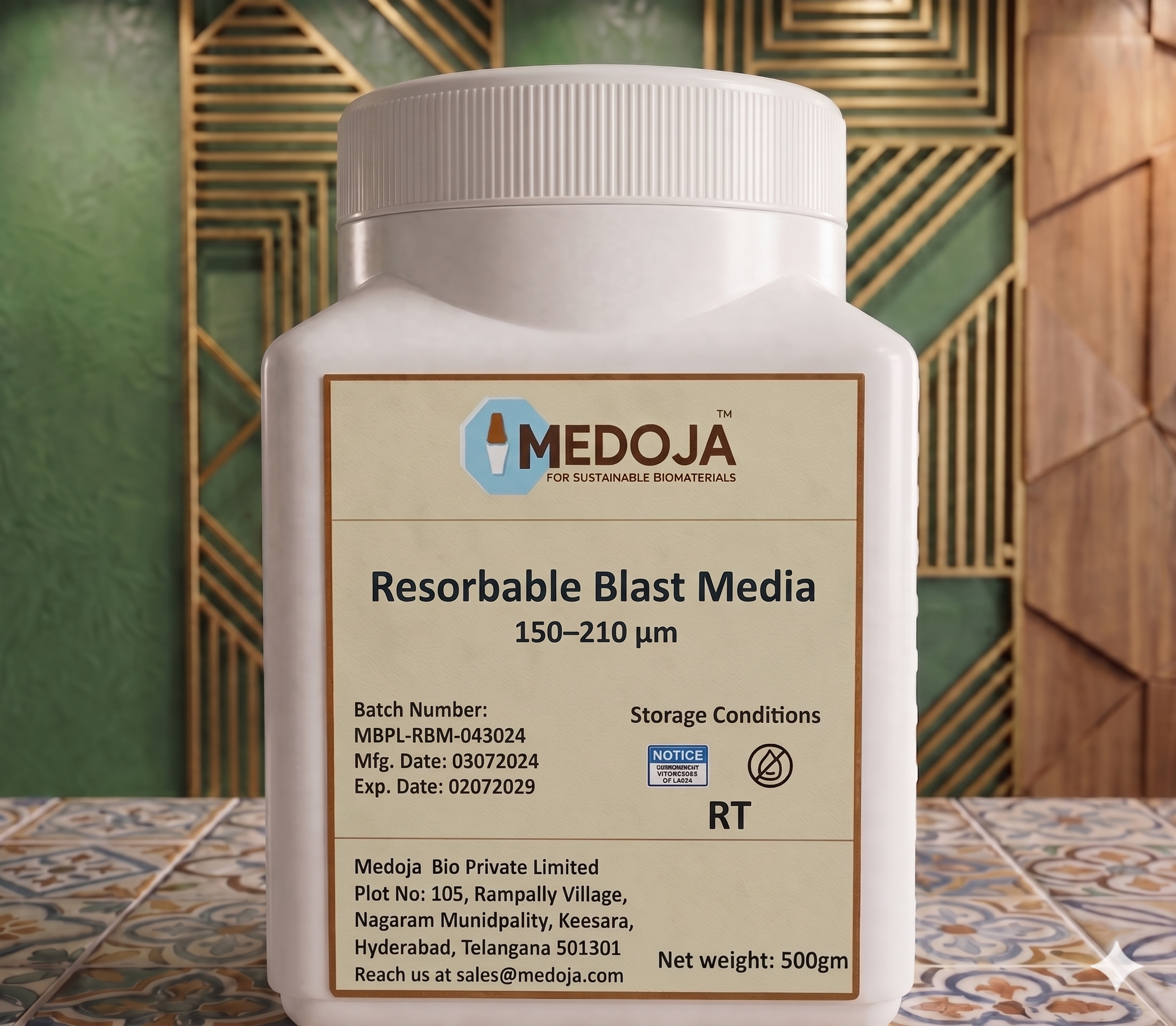
RBM Treatment for Implant Surface Optimization
Biocompatible & Resorbable Particles
Resorbable Blast Media (RBM) is a surface treatment technique that utilizes biocompatible, resorbable particles to blast the surface of medical implants. This process creates a roughened texture on the implant surface, which is critical in promoting osseointegration — the direct, functional connection between bone and the implant surface.
Calcium Phosphate Material Science
By using materials like hydroxyapatite powder (HA) and beta-tricalcium phosphate (β-TCP) — which are both biocompatible and resorbable — RBM ensures that any residual blasting media left on the surface will be naturally absorbed by the body. This minimizes the risk of contamination compared to traditional methods using materials such as aluminum oxide.
Clean, Well-Textured Surface
The implant is blasted with calcium phosphate-based particles at high velocity. After blasting, a thorough cleaning step, often including acid etching, is performed to remove any residual particles. The result is a clean, well-textured implant surface with no biocompatibility concerns.
How RBM Treatment Works
High-Velocity Blasting
Implant is blasted with calcium phosphate-based particles at high velocity.
Macro-Roughness
A controlled, textured surface forms — increasing the available surface area.
Cleaning & Acid Etching
A thorough cleaning step removes any residual particles from the surface.
Osseointegration
Clean surface supports cell attachment, bone formation and stable integration.
Key Applications and Benefits of RBM
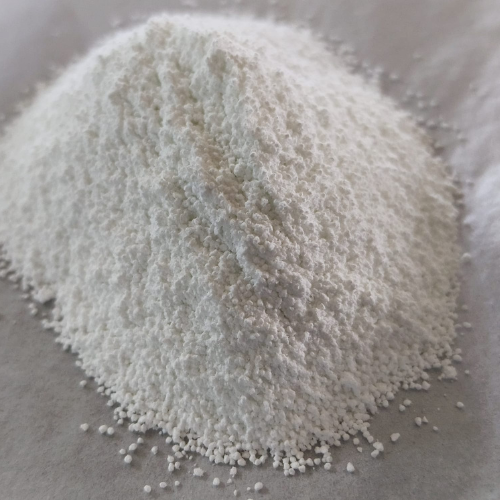
RBM is predominantly used in the preparation of dental and orthopedic implants, where improved surface roughness leads to enhanced initial stability, better long-term integration with bone, and faster healing times and improved patient outcomes.
By using materials like hydroxyapatite powder (HA) and beta-tricalcium phosphate (β-TCP) — which are both biocompatible and resorbable — RBM ensures that any residual blasting media left on the surface will be naturally absorbed by the body. This minimizes the risk of contamination compared to traditional methods using materials such as aluminum oxide.
The implant is blasted with calcium phosphate-based particles at high velocity. After blasting, a thorough cleaning step — often including acid etching — removes any residual particles. The result is a clean, well-textured implant surface with no biocompatibility concerns.
Superior Osseointegration & BIC
The roughened surface significantly improves bone-to-implant contact (BIC), supporting faster, more reliable integration and stable long-term outcomes.
Minimal Contamination Risk
Unlike non-resorbable media, RBM ensures a cleaner implant surface — any residual blasting media is naturally absorbed by the body.
RBM vs. Sandblasted, Large-Grit, Acid-Etched (SLA)
RBM effectively creates macro-scale roughness, which increases surface area and encourages cell attachment and bone formation. Often, RBM is combined with techniques like acid etching to achieve both micro and macro roughness, optimizing the implant for biological integration.
While both RBM and SLA aim to improve osseointegration, key differences include: RBM uses resorbable calcium phosphate particles, which reduces contamination risk because residual media is naturally absorbed by the body. SLA involves non-resorbable particles followed by acid etching, with higher contamination potential if the surface is not cleaned thoroughly.
Only high-purity materials that meet stringent regulatory standards (e.g., ASTM F1185, F1088) are used in RBM. These standards ensure that the materials are safe, effective, and compliant with medical device regulations.
RBM in Dental, Orthopedic & 3D-Printed Devices
RBM is predominantly used in the preparation of dental and orthopedic implants, where improved surface roughness leads to enhanced initial stability, better long-term integration with bone, and faster healing times.
Dental ImplantsJawbone Integration
RBM-treated implants show improved stability and faster integration with the jawbone — ideal for both standard and immediate implant placement procedures.
Orthopedic ImplantsBone Screws · Joints · Spine
Used for bone screws, joint replacements (hip, knee), and spinal devices to enhance bone bonding and reduce loosening over time.
3D Printed Medical DevicesCustom Implants
RBM treatment is employed to clean and roughen the surface of custom 3D-printed implants, ensuring compatibility for bone on-growth.
By choosing our resorbable blast media, you provide your patients with an innovative solution that not only simplifies the healing process but also promotes long-term implant stability and overall satisfaction across dental and orthopedic procedures.
Long-Term Implant Stability & Success
By choosing our resorbable blast media, you provide your patients with an innovative solution that simplifies healing and promotes long-term implant stability — across dental, orthopedic, and 3D-printed device applications.
Improved Osseointegration & BIC
Better bone-to-implant contact and reduced healing times for predictable clinical outcomes.
Long-Term Implant Stability
Cleaner implant surfaces and stronger bone bonding support durable, lasting results.
Higher Success in Difficult Cases
Enhanced success rates in immediate placements and other challenging implant scenarios.
Our advanced RBM technology supports quicker recovery, stable bone-to-implant interfaces, and higher success rates. By choosing our resorbable blast media, you provide your patients with an innovative solution that promotes long-term implant stability. As part of this innovation, Sustainable Biomaterials are gaining attention for their role in enhancing the safety and performance of implant systems.
Frequently Asked Questions
01 What is Resorbable Blast Media (RBM) used for?
RBM is a surface treatment technique that uses biocompatible, resorbable calcium phosphate particles to blast the surface of medical implants. It creates a controlled macro-roughness that promotes osseointegration — the direct, functional connection between bone and the implant surface. It is most commonly used for dental implants, orthopedic implants (bone screws, joint replacements, spinal devices), and 3D-printed custom medical devices.
02 How is RBM different from SLA (Sandblasted, Large-Grit, Acid-Etched)?
Both techniques aim to improve osseointegration, but RBM uses resorbable calcium phosphate particles — any residual blasting media is naturally absorbed by the body, which reduces contamination risk. SLA involves non-resorbable particles followed by acid etching, which carries a higher contamination potential if the implant surface is not cleaned thoroughly.
03 What is the purity, particle size and grade of your RBM powder?
Our RBM is supplied with a customizable particle size of 150–210 µm in medical grade, specifically engineered for advanced dental and orthopedic implant surface treatment applications. Each batch undergoes rigorous quality verification and is accompanied by a Certificate of Analysis, ensuring reliable consistency and compliance for regulated medical device manufacturing.
04 Which regulatory standards does your RBM material comply with?
Only high-purity materials that meet stringent regulatory standards — including ASTM F1185 and ASTM F1088 — are used in our RBM. These standards ensure the materials are safe, effective, and compliant with international medical device regulations for dental and orthopedic implant applications.
05 What is the minimum order quantity and lead time?
The minimum order quantity is 100 g, with bulk discounts available for larger orders. Samples can be provided on request for evaluation prior to commitment. Standard production lead time is 5–7 business days from order confirmation, and we ship globally with full export documentation, including Safety Data Sheets and Certificates of Analysis.